Fault-finding for sparkies.
Search the symptom, get the next test.
Describe what the gear's doing and get ranked likely causes and the next test to run — with the reading to expect and what it means. Built for electricians and apprentices, on the phone, on site.
Can't name it? Use the guided finder — pick the gear and what it's doing.
Free while it's in preview. No credit card — and no account needed to use the guides.
Contactor has voltage at the coil but won't pull in
You measure the rated control voltage (e.g. 24V) across the coil terminals, but the contactor refuses to energise — no clunk, no pull-in, contacts stay open.
Most likely first
- 1Open or burnt-out coil
- 2Measuring a 'phantom' or floating voltage
- 3Wrong coil voltage rating fitted
First test
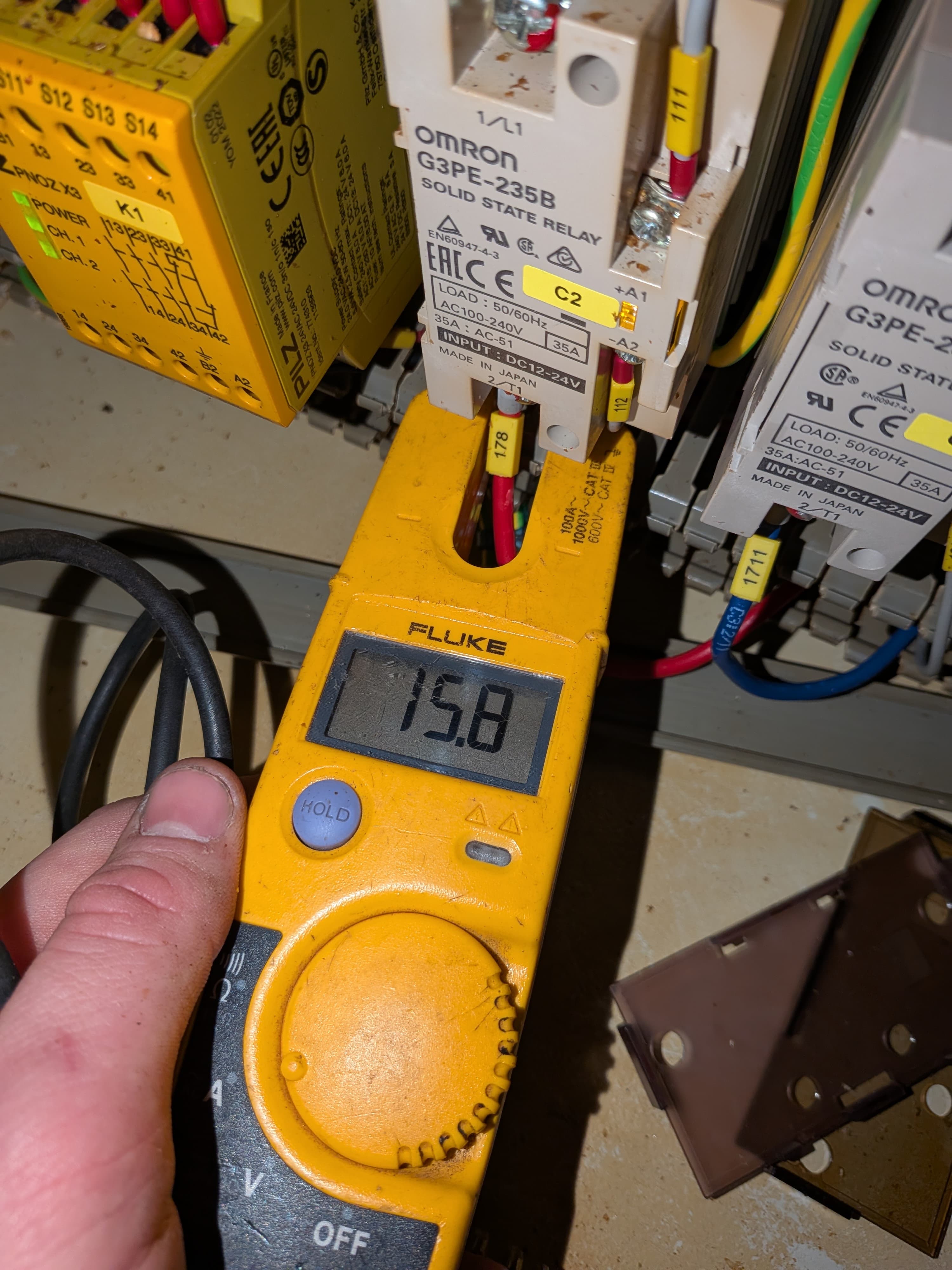
Re-measure coil voltage right at the coil terminals while a colleague (or the logic) calls the contactor in.
Expect: Rated coil voltage present and roughly steady at the moment of call-in.
Two modes, one tool
Every fault guide adapts to who's using it — switch between a full, explained walk-through and a fast, terse test path with one tap on any fault page.
Apprentice mode
More explanation, why each test matters, what the reading means, common mistakes and safety reminders — to build the method.
Qualified mode
Shorter steps, the expected readings and a fast test sequence, with quick access to related faults — for when you know the gear.
Next-test logic
Each step says what to check, the reading to expect, what a pass/fail means, and where to go next — symptom → test → cause.
Works offline on site
Install it to your phone and it works where the reception doesn't — guides you've opened and the readings you log stay available in a dead-spot switch room or out on a remote job.
Your saves shouldn't die with your browser
Everything works without an account. A free account makes it yours — saved, synced and waiting on the next device.
Your saves, on every device
Bookmarked guides sync to your free account — start on the phone in the switch room, pick it up on the laptop in the ute. Lose the phone, keep the saves.
Join the discussion (soon)
Comments on fault guides are coming — war stories, gotchas and better tests from sparkies on the tools. Account holders are in when it lands.
Free while it's in preview
Every guide, the finder, the log and the calculators — free right now. An account costs nothing and takes about 20 seconds. No credit card.
Browse by category
Jump straight to the kind of gear you're working on.
Contactors & relays
Coils, contacts, chatter, and switching faults.
Motors & overloads
Won't start, tripping overloads, and running faults.
Forward / reverse circuits
Direction control, interlocks, and reversing logic.
Limit switches & sensors
Proximity, photo-eyes, and position switching.
VSDs
Drive faults, start commands, and trip codes.
PLC inputs / outputs
Inputs not reading, outputs on but device dead.
Questions before you dive in?
Is it actually free?
Yes. Every fault guide, the guided finder, the readings log and the calculators are free while the site is in preview — no credit card, no trial clock.
Do I need an account to use it?
No — you can search and work through any guide without one. A free account keeps your saved guides backed up and synced across devices, and you'll be able to comment on guides when discussion lands (soon).
Is this a substitute for a licensed electrician?
No, and it doesn't pretend to be. Electrical work is restricted to licensed people across Australia. Sparkie Sidekick is a support and learning tool — it can't see your installation and never replaces licensed judgement, the wiring rules, manufacturer manuals or your site procedures. Isolate and prove dead first, every time.
Does it really work offline?
Yes — install it to your phone and guides you've already opened stay available with zero reception, plant room or paddock. Readings and test progress you log are kept on your device.
What do you do with my data?
An email and password to run your account, plus whatever you choose to save — that's it. No ad trackers and no selling your details. The privacy policy spells it out in plain English.
Search the symptom. Get the next test.
Free for Australian sparkies while it's in preview — pick the gear, say the symptom, and work the tests.
Work safe — every time
Isolate and prove dead before you touch anything — and prove your tester on a known live source before and after. Use approved, in-date test equipment and rated PPE. Follow your site procedures, and verify everything against the current standards and the manufacturer's manual. Apprentices: live testing under direct supervision only.
Sparkie Sidekick is a support tool — it can't see your installation and doesn't replace a licensed person's judgement, the standards or your site procedures. If you're past your competence or authorisation, stop and hand it on. Read the full electrical safety disclaimer.